Olkusz
 MIASTO | |
 Olkusz | |
| Administrative location | |
| Voivodeship | Lesser Poland Voivodeship |
|---|---|
| Gmina | Gmina Olkusz |
| Rodzaj gminy | urban-rural municipality |
| History and residents | |
| Prawa miejskie | 1299 |
| Powierzchnia (km²) | 25.65 |
| Population | 36,000 |
| Mayor | Dariusz Rzepka |
| Location and information | |
| Tablice rejestracyjne | KOL |
| City website | |

Olkusz is a town in the Lesser Poland Voivodeship, in Olkusz County, and the seat of the urban-rural municipality of Olkusz. It is situated on the western edge of the Kraków-Częstochowa Upland, on the Baba River, along national road No. 94 and voivodeship roads Nos. 783 and 791.
Until 1975, the town was part of Kraków Voivodeship; from 1975 to 1999, it belonged to Katowice Voivodeship; and since 1999, it has been part of Lesser Poland Voivodeship.
Name of the town
In ancient times, Olkusz was called Ileus. According to the starosta of Rabsztyn, who described the Olkusz region in the 16th century, the name Olkusz comes from the word kusza (crossbow). Łabęcki, writing about this in his Górnictwo Polskie (Polish Mining), derives it from the working of marly clays (ileus). Olkusz is known historically for its silver and lead mines.
History
Even in ancient times, lead from Olkusz was highly valued and brought substantial revenues to rulers. People came from distant regions to mine silver and lead, building houses over a large area.
Numerous privileges

It was not until the reign of Casimir the Great that the town was put in order, surrounded by walls and provided with churches. For many centuries, Olkusz benefited from numerous royal privileges and grew immensely wealthy, reaching the height of its development under the Jagiellonian dynasty and Stephen Báthory. During the reign of the latter, there was a mint in Olkusz. The county administrative office building now stands on that site. In the 16th century, the town had about 30,000 inhabitants, and their wealth was so great that noblemen readily married the daughters of Olkusz townspeople.
Decline of Olkusz
This, however, harmed the mines. Their owners from among the nobility were unwilling to pay for measures to protect the mines against flooding. In the 17th century, in addition to the devastation of the Swedish war, during which General Miller used Olkusz miners to forge horseshoes near Jasna Góra, where many of them died, Olkusz suffered a flood of the Baba River so severe that it inundated some of the mines. What had survived was finally flooded by the waters of the same river in 1703, during another major flood.
The great fire of 1737 also contributed to Olkusz's decline. Later repeated attempts to drain the mines, particularly during the reign of Stanisław August Poniatowski and under the Bank of Poland, produced no results. Traces of the old silver and lead mines can still be seen along roads near Olkusz. Behind properties Nos. 65 and 73 on 3 Maja Street stand red sandstone posts marking the direction of one of Olkusz's six drainage adits, namely the Ponikowska Adit.
January Uprising


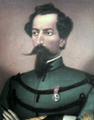
Among later historical events, the most significant year in the history of Olkusz was 1863. That year, a unit commanded by Cieszkowski entered Olkusz, and on 5 May 1863, near the village of Krzykawka, in the vicinity of Sławków, a battle took place between an insurgent unit and Russian troops. During the battle, Francesco Nullo, a hero of the wars for Italian liberation, a Garibaldian and colonel who served as a general in the Polish uprising, was killed. He was buried in the old Olkusz cemetery. A monument in the shape of a shattered oak stands on his grave. Two other insurgents were buried beside him, one named Władysław Romer and the other unidentified.
Buildings around the market square
Old Olkusz was surrounded by walls. Today's Kościuszki, Górnicza and Mickiewicza streets were laid out on the levelled town moat. A water tower once stood in the market square, along with a town hall and a building known as the Royal House, which housed the mining administration. The buildings around the square were constructed relatively recently. Only the tenement house at No. 15 has a Gothic gate made of red sandstone. It may have come from one of the former churches of Olkusz, which no longer exist. The tenement house on the corner of Augustiańska Street has preserved its buttresses. The buildings on the northern side of the market square are better preserved. Traces of medieval architecture can be found here. The tenement house at No. 25 has a Baroque portal with the house mark of a former Olkusz townsman, Maciej Słowak. The same mark appears on his gravestone in the church. Baroque vaults have survived in this house. The building at No. 29 has a fine Renaissance portal. From this building, an entrance leads to cellars extending over several levels.
Augustiańska Street was so named because an Augustinian monastery and church once stood there. Architectural remains of the former church can be seen on the property at No. 7 on this street.
Districts and neighbourhoods
- Stoczki
- Pakuska
- Ponik
- Za Skałami
- Podgrabie
- Słowiki
- Sikorka
- Czarna Góra
- Kocatówka-Dodatki
- Stary Olkusz
- Dodatki Pomorskie
- Pomorzany
- Parcze Dolne
- Mazaniec
- Kamyk
- Zagaje
- Parcze
- Piaski
- Skalskie
- Parcze Górne
Historic monuments
Memorial sites
People associated with Olkusz
-
 Add a photograph:
-
-
Add a photograph:
-
Add a photograph:

Culture
Museums
- Bogdan Szczygieł African Studies Museum
- A. Minkiewicz PTTK Regional Museum
- Olkusz Region Firefighting Museum
Libraries
- [to be expanded]
Folk tales and legends of Olkusz
- [to be expanded]
Religious communities
Roman Catholic Church
Cemeteries
Press, social networking sites and television
- [to be expanded]
Twin towns and sister cities
- Bruay-la-Buissière, France
- Schwalbach am Taunus, Germany
- Bjerringbro, Denmark
- Staffordshire Moorlands, England
- Bergamo, Italy
- Pontenure, Italy
Video
Provided ID could not be validated.
Provided ID could not be validated.
Bibliography
- Przewodnik po Zagłębiu Dąbrowskim, Sosnowiec: Komitet Przewodnika po Zagłębiu Dąbrowskim, 1939, s. 103–106.
- Feliks Kiryk (collective work), Olkusz, in: Dzieje Olkusza i regionu olkuskiego, vol. 1, Warsaw–Kraków, 1978.
- Feliks Kiryk (collective work), Olkusz, in: Dzieje Olkusza i regionu olkuskiego, vol. 2, Warsaw–Kraków, 1978.
See also
External links
References
Contributors
- Krzysztof Poplawski (100.0%)